
short film (14′)
by Gian Luca Catalfamo & Tatiana Ivensen
written by Gian Luca Catalfamo, Tatiana Ivensen and Angelo Farina
STATUS: completed / in distribution
Financed by Frocinema – ArciGay Roma
LOGLINE: A middle-aged man arrives at a remote naturist beach, looking for fleeting encounters. Instead, he stumbles upon a group of migrants who have just landed. As the coast guard closes in, his impulsive decision to intervene sparks a spiral of chaos and absurdity.
NARRATIVE CONCEPT: The weirdest hero but a hero nevertheless. An absurdist anti-authoritarian satire, a story of defiance and deception. What the present fears is what once changed the course of time.
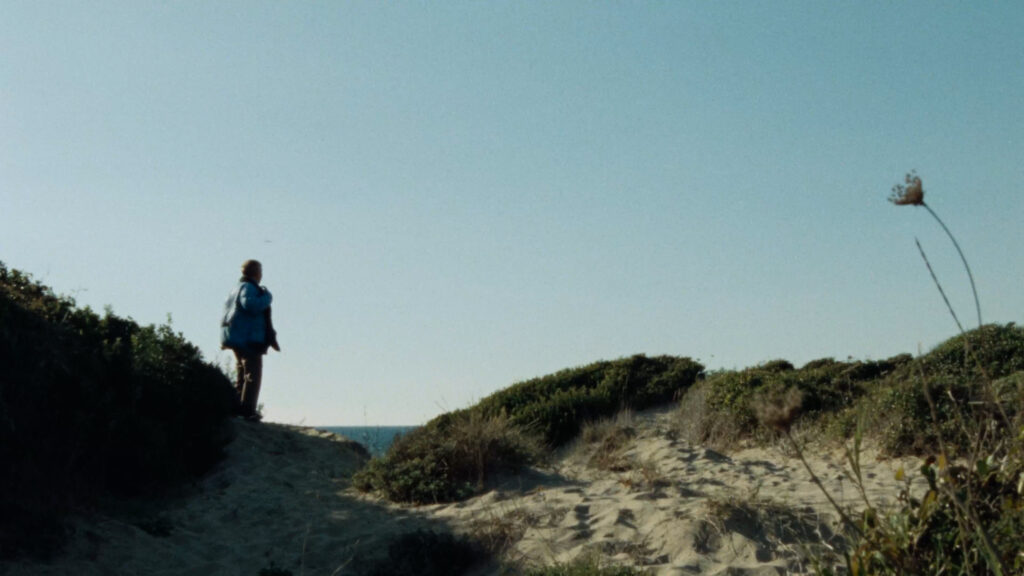
DIRECTOR’S STATEMENT: I made this film to show the colision between authority and desire. The winter beach sets a desolate stage, a place where everything feels possible, and yet this is where private desires clash with institutional control. This world is fragile, grotesque, and surreal, resembling a satirical western where the boundaries between personal freedom and social control blur. Cruising is a language of glances and pauses that exists beyond regulation. It’s also the kind of taboo authorities prefer to ignore as long as it remains on the fringes of civilization. However a body seeking intimacy becomes particularly visible the moment survei lance enters the frame. A drone appears above the dunes. The authorities’ real target is elsewhere: they search for two displaced men hiding in the dunes. The two migrants are invisible to the eye from above that’s momentarily distracted by nudity. The exchange of glances resumes, but this time it is not an erotic game but a cultural colision, and a desperate attempt to understand each other.
The migrants and the cruiser look at one another, assess, misunderstand, judge, and recognize what is shared. Empathy does not erase distance. Solidarity can be awkward, partial, even uncomfortable. The naked body is vulnerability made public, it attracts control and, paradoxicaly, redirects it. The authority is at a loss. Incapable and unwiling to act, nevertheless each of them is bound to the next by duty rather than intention. The film moves from restraint to eruption. The space fractures as authority intervenes clumsily, revealing a system that reacts before it understands. Responsibility is passed along mechanicaly, creating a vicious circle where obligation feeds frustration and frustration sustains the system.
The chaos reaches its peak with the presence of a playful dog and the irrational fear it causes. I chose to end the film quietly. As authority subverts expectations by choosing to remain unaware, salvation can also arise from the forces meant to suppress. After chaos, what remains is the same landscape, where freedom is not overtly forbidden, but neutralized by protocol, fear, and misunderstandings. For over a decade I have worked inside a nightclub embedded in the LGBTQ+ underground, situated in one of the most diverse neighborhoods of Rome. Observing and growing within that community as a doorman, musician and cinephile, I have witnessed its rituals. The film comes from that proximity to an environment where humans are constantly negotiating visibility, desire, danger, and solidarity.
STYLE: The visual style defines the film’s atmosphere as much as its meaning. The image shifts from harsh, blinding sunlight to the softer tones of sunset, with a deliberately desaturated color palette that flattens contrasts and enhances a sense of exposure and suspension. These tones evoke distant western and science-fiction atmospheres, placing the story in a landscape that feels both archaic and slightly alien. The warmth and grain of film footage coexist with cold, over-sharpened digital images produced by surveillance devices, creating visual friction between organic presence and mechanical observation. Variations in rhythm and subtle distortions of time reinforce a subjective feeling of disorientation and entrapment, allowing the image to reflect the tension between desire, control, and misunderstanding.
THEMES: Each character is caught inside a human chain, bound to the next by duty rather than intention. Responsibility is passed along mechanicaly, creating a vicious circle where obligation feeds frustration and frustration sustains the system. No one fuly chooses, yet everyone participates. This chain of control extends even to moments of solidarity. When the protagonist helps the two migrants, his actions are read through conflicting lenses. For them, he is both a savior and an anomaly. Gratitude coexists with unease, compassion with judgment. His naked, queer body stands in stark contrast to their own cultural and religious codes, exposing how empathy can exist alongside distance, and how help does not automaticaly erase difference. By reversing roles and exaggerating mechanisms of surveilance, the film exposes the absurdity of a system that reacts automaticaly, policing bodies and desires while losing sight of context and humanity. What remains is a landscape where freedom is not overtly forbidden, but quietly neutralized by protocol, fear, and the silent misunderstandings that bind everyone together.